


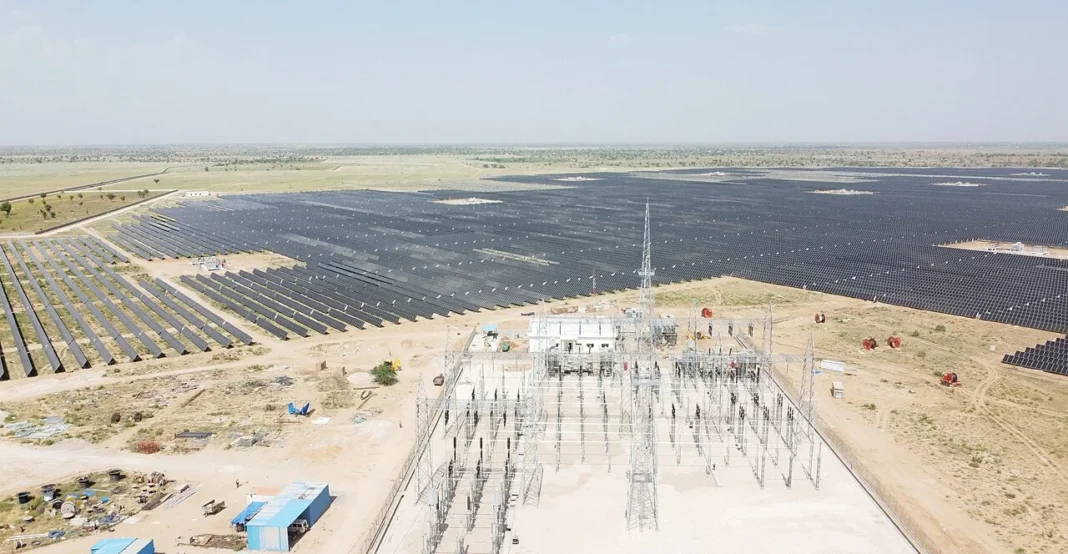


44.6 GW of solar capacity added in 2025–26 — a record, above the 34 GW target and nearly double the prior year — lifted India’s solar fleet past 150 GW and total renewables to about 275 GW, securing third place globally, and the momentum is now spilling into green hydrogen.
Under the National Green Hydrogen Mission, some 3,000 MW a year of electrolyser manufacturing has been awarded across 15 companies with about ₹4,440 crore in incentives, and early production capacity has begun to come online against a 2030 target of 5 million tonnes a year. For developers and equipment makers, the solar run-rate near 45 GW implies a durable, multi-year order book.
The re-rating driver is the run-rate: ~45 GW a year of solar is a supply-chain order book, and green hydrogen is the next leg.
By the Numbers
- FY26 solar added: ~44.6 GW (Record-breaking expansion; comfortably cleared the internal 34 GW target)
- Solar installed / total RE: ~150 GW / ~275 GW (Solar retains a dominant ~55% share of India’s renewable basket)
- Green H2 electrolysers: ~3,000 MW/yr manufacturing capacity awarded across 15 firms (₹4,440 cr SIGHT incentive tranche complete)
- 2030 target: 5 million metric tonnes per annum (MMTPA) of green hydrogen production
The candid constraint is cost and integration: green hydrogen still runs well above grey hydrogen on price, and variable solar needs storage, firm-power contracts and transmission to convert capacity into round-the-clock supply. Where those pieces align, project bankability improves markedly.
The constructive read is a lengthening value chain — firm-and-dispatchable tenders, battery storage, electrolysers and localised manufacturing — as India turns a capacity milestone into an industrial base spanning power and clean fuels.