




Blitz India Business
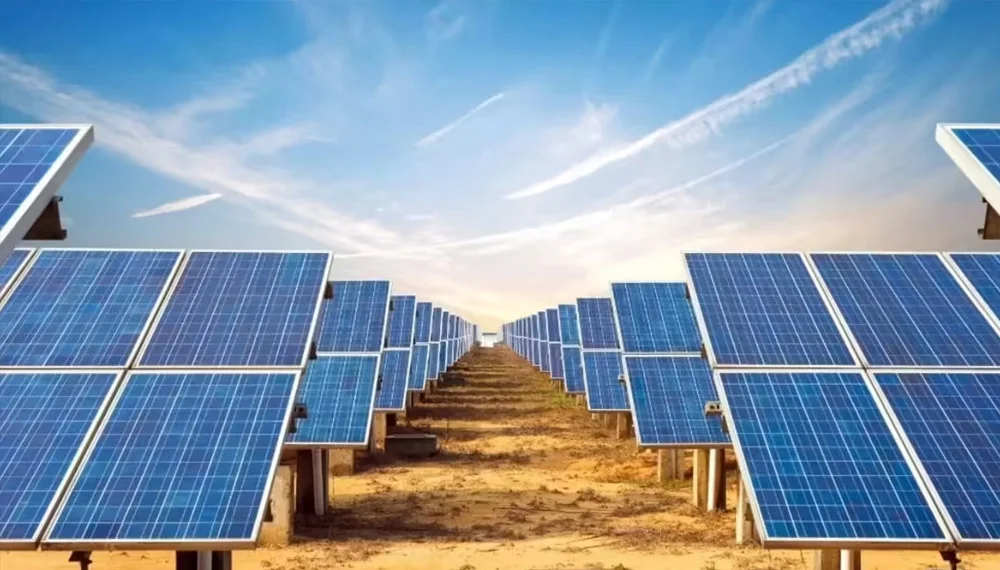
Behind the daily market noise sits one of the largest capital-allocation stories in the economy: India has already crossed 50% of installed electricity capacity from non-fossil sources — a milestone reached roughly five years ahead of its Paris-accord target — and non-fossil capacity now tops 280 GW. The last financial year logged the single biggest annual capacity addition in the country’s history.
For investors, the significance is that the transition has moved from subsidy-led promise to bankable pipeline. Solar alone now exceeds 150 GW, India ranks among the world’s top three in renewable capacity, and the headline target — 500 GW of non-fossil power by 2030 — increasingly reads as a project-finance schedule rather than an aspiration. That reframes where long-duration capital can be deployed with policy tailwinds.
Bankable, not just green: Record additions past the halfway mark turn a climate goal into a multi-year capital-allocation opportunity.
The generation trade is maturing; the next decade’s alpha is in storage, transmission and the domestic supply chain that makes the megawatts firm.
The Long View
• Milestone: 50% capacity non-fossil — ~5 years early
• Non-fossil: above 280 GW installed
• Solar: more than 150 GW; 3rd globally in renewables
• Frontier: storage, grids, cell & module manufacturing
The next value pool is integration, not just installation. As variable solar and wind rise, the returns migrate toward battery storage, pumped hydro, transmission upgrades and firm-power contracts — and toward the domestic manufacturing of cells, modules and grid equipment that reduces import dependence. The honest risks are real: grid balancing, land and financing costs, and the need to keep tariffs sustainable as the mix shifts.
The constructive, long-view read is that India has de-risked the hardest question — whether the build-out can happen at scale — and can now focus capital on making it firm and domestic. For patient investors, an energy system that adds record capacity every year while localising its supply chain is precisely the kind of compounding, policy-aligned theme that rewards a long horizon.