




Blitz India Business
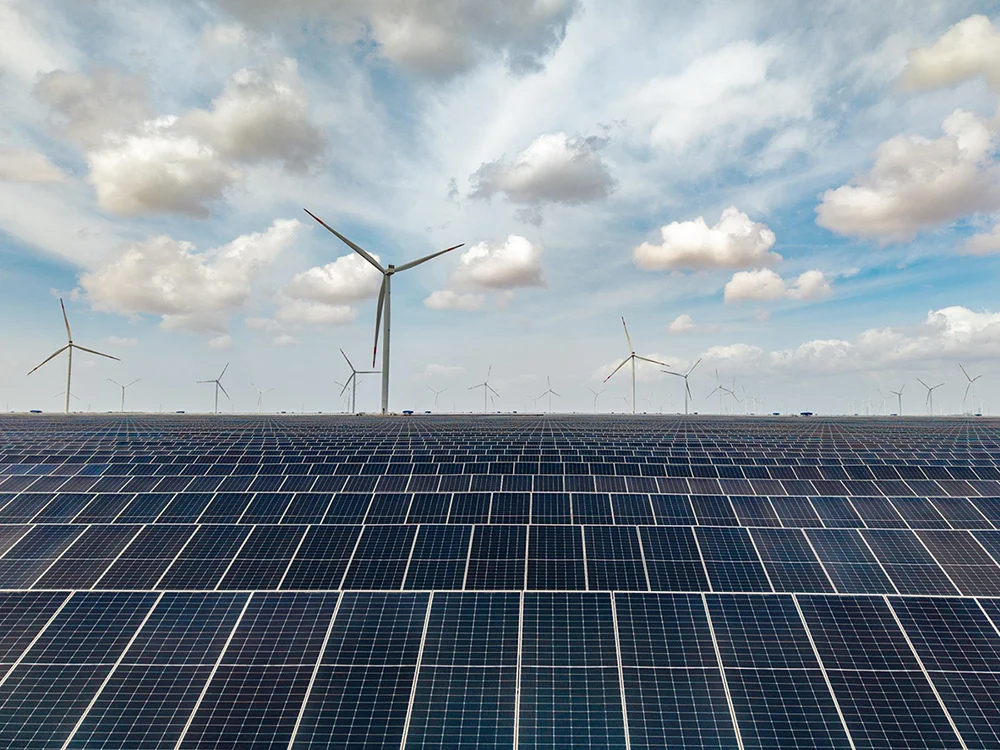
The half-year scoreboard is emphatic. India added about 30.6 GW of renewable-energy capacity in the first six months of 2026, up roughly 25% year-on-year, with solar the standout — new solar installations jumped about 43%, taking cumulative solar PV capacity past 162 GW. Total installed renewables, including large hydro, stand near 288 GW, keeping India among the world’s top three by clean-power capacity.
The geography of the build shows where the momentum sits. Gujarat led the first half with about 7.7 GW of new solar, followed by Rajasthan near 6.7 GW and Tamil Nadu around 2.5 GW — a handful of sun-rich states doing much of the national heavy lifting. Each gigawatt is also a magnet for capital: module and cell factories, land and civil works, inverters and, increasingly, the batteries and transmission lines needed to make variable power dependable.
A record half-year: ~30.6 GW of renewables added in H1 2026, solar up ~43% and past 162 GW — with Gujarat, Rajasthan and Tamil Nadu leading the installations.
Adding a gigawatt is now the easy part. The next phase of India’s energy story is about storing, moving and firming the power the panels make.
By the Numbers
• H1 2026 RE additions: ~30.6 GW, +25% YoY
• Solar: new installs +43%; cumulative PV past 162 GW
• Total RE: ~288 GW incl. large hydro; India among the world’s top three
• Leaders: Gujarat ~7.7 GW, Rajasthan ~6.7 GW, Tamil Nadu ~2.5 GW (H1)
For investors, the signal is a long, compounding runway rather than a single quarter’s trade. Solar’s economics now stand on their own in much of the country, which is why the additions are accelerating; the returns arrive over long asset lives across generation, manufacturing and grid infrastructure. The binding constraint is shifting from panels to plumbing — storage to firm up supply, and transmission to carry it from sun-rich states to demand centres — and that is exactly where the next tranche of capital and policy is heading.
The constructive read is that the energy transition is among India’s largest and most durable investment stories, and it is running ahead of schedule on solar. The way forward is to pair capacity with dispatchability: scale battery and pumped-hydro storage, expand the grid, and keep deepening domestic cell and module manufacturing so the build-out is increasingly made in India. Handled with that discipline, a record half-year of additions becomes the foundation of an energy system that is cleaner, cheaper and more secure — and a lower oil-import bill over time.