




NANDAN H DAWDA
NEW DELHI:Despite its criticality for millions, India’s public transit infrastructure exhibits significant equity gaps, particularly impacting marginalised demographics. Urban centres like Delhi demonstrate restricted access for economically disadvantaged populations, with only a minute fraction utilising public transport.
Similar patterns prevail in Mumbai and Ahmedabad, where infrastructure inadequacies amplify socio-economic disparities among vulnerable groups. In rural India, where a substantial majority resides, limited transport options exacerbate inequality by restricting access to essential services. Mobility challenges are further pronounced for individuals with disabilities, with substantial barriers impeding access. While initiatives such as the “Accessible India Campaign” exist, their implementation has yielded limited progress. Women’s mobility is curtailed by safety and security concerns, restricting their access to education and employment. Achieving comprehensive sustainable mobility necessitates the integration of social inclusivity, gender sensitivity, and safety into policy and infrastructure, thereby ensuring equitable access to economic opportunities and improved quality of life. Government policy, including the National Urban Transport Policy (NUTP), has aimed to enhance public transport; however, a predominant focus on environmental sustainability has often overshadowed social equity considerations.
Free public transport The deployment of free or subsidised public transport as a strategic measure to address affordability and equity is prevalent globally. However, the efficacy of such interventions is contingent upon comprehensive implementation across multi-modal transit systems. It is posited that universal subsidies can drive modal shifts from private vehicles to public transit, thereby fostering environmental sustainability and bolstering infrastructure capacity.
Conversely, critiques highlight potential inefficiencies in operational efficacy, citing reduced incentives for cost recovery and innovation. Concerns also exist regarding the potential for subsidies to diminish service enhancement imperatives. A critical evaluation of subsidy mechanisms is imperative to ascertain their impact on achieving social equity and environmental objectives. Such analyses are crucial for optimising frameworks to ensure inclusive, resilient, and sustainable public transport systems.
State governments have instituted programmes to bolster social equity and gender inclusion within public transit through the provision of complimentary or subsidised bus travel for women, alongside fare reductions for vulnerable demographics, including senior citizens and individuals with disabilities. States implementing free bus transit for women are:
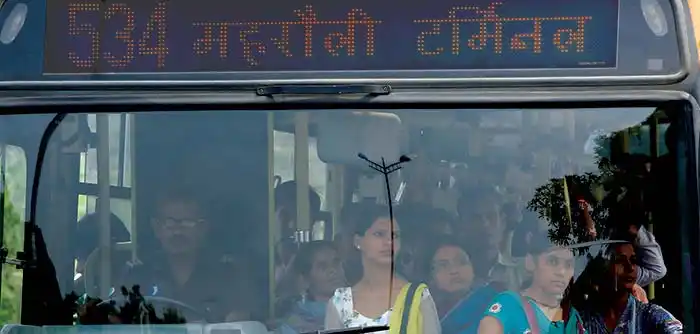
• Delhi: The “Pink Ticket” scheme, implemented in October 2019, permits women to travel without fare on Delhi Transport Corporation (DTC) and cluster buses.
• Karnataka: Introduced in 2023, the “Shakti” scheme facilitates free bus passage for women, aiming to enhance mobility and economic agency.
• Tamil Nadu: Since 2021, a no-cost bus travel programme has been operational, resulting in an increase in female bus ridership from 40 per cent to 61 per cent within nine months.
• Punjab: In 2021, a free bus travel scheme was launched to promote gender inclusivity in public transit.
• Telangana: The state has implemented programmes offering free bus rides for women and the marginalised groups of society to enhance accessibility to public transportation.
• Andhra Pradesh: Women are permitted to travel without charge on state Road Transport Corporation (RTC) buses within their respective districts, enhancing local mobility.
States and cities offering fare concessions to vulnerable populations:
• Maharashtra: The Maharashtra State Road Transport Corporation (MSRTC) provides a 50 per cent fare reduction for women across all state transport bus categories via the “Mahila Sanman Yojana”. Senior citizens aged 75 and above travel gratis, while those aged 65-75 receive a 50 per cent concession.
• Mumbai: Mumbai Metro Lines 2A and 7 extend a 25 per cent fare concession to senior citizens (over 65), individuals with disabilities, and students up to Class 12.
• Andaman and Nicobar Islands: Individuals with physical disabilities (40 per cent and above, under 80 years) are eligible for free bus passes on ordinary / express bus services.
• Brihanmumbai Electric Supply and Transport (BEST): BEST facilitates front-door boarding for individuals with physical and mental disabilities, senior citizens, and pregnant women. These initiatives exemplify a coordinated effort across Indian state entities to advance social equity and gender inclusivity in public transportation, ensuring improved mobility access for vulnerable and disadvantaged groups.