




Blitz India Business
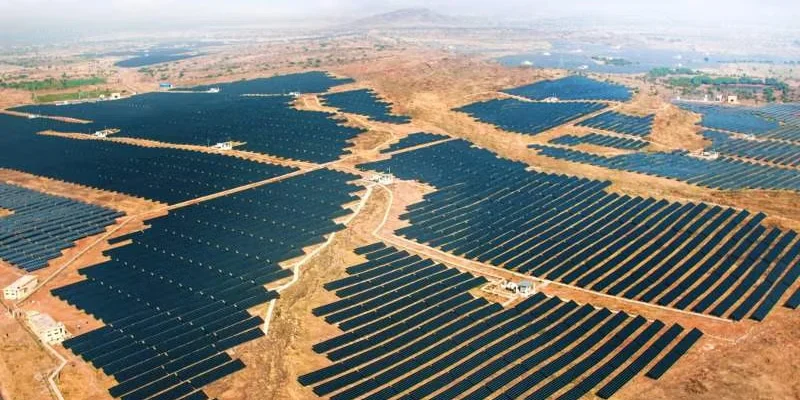
NEW DELHI: Beneath the quarterly noise sits one of the market’s most durable themes: India’s clean-energy build-out. Total renewable capacity has reached about 288 GW, and the first half of 2026 alone added a record near 29 GW of new solar and wind — a surge led by solar and by rooftop installations under the household solar scheme. Cumulative solar has crossed 150 GW, ranking India third in the world. For allocators, this is less a news item than a multi-year capital-formation cycle.
The investment logic is that the economics now pull the same way as the policy. Solar and wind are the cheapest new generation India can build, so each gigawatt tends to lower the long-run cost of power while trimming a fossil-fuel import bill that pressures the current account. That draws capital across a widening chain — developers and independent power producers, the transmission and grid names that move the electrons, the equipment makers scaling under production-linked incentives, and the emerging storage and financing businesses that firm up variable supply.
A multi-year cycle: Renewable capacity near 288 GW and a record ~29 GW added in H1 2026 point to sustained capital formation across generation, grids, equipment and storage.
The cheapest megawatt wins the long game. India’s edge is that the affordable choice and the strategic choice have become the same choice.
The Long View
• Total renewables: ~288 GW installed
• H1 2026: record ~29 GW of solar and wind added
• Solar: cumulative past 150 GW; India third globally
• Where value migrates: storage, transmission, domestic cell & module manufacturing
The honest account names the risks that decide returns. Sun and wind are variable, so the value increasingly migrates to what firms them — battery and pumped-hydro storage, transmission build-out, and grid management — and to the domestic manufacturing of cells and modules that determines whether the build-out anchors profit at home or imports it. Execution risk (land, evacuation, financing), and the returns discipline of developers bidding for projects, are the variables to track rather than headline capacity alone.
The constructive, long-view read is that this is a rare theme where consumer economics, industrial policy and the import-bill maths point in one direction — the mark of a structural trend rather than a cyclical trade. The way forward, for the economy and the market alike, is to build the storage, grids and domestic supply chains that convert record installations into round-the-clock reliable power. For investors, the durable signal is capacity that firms up and localises, not just capacity that is added.