




Anoop Saxerna
NEW DELHI: For decades, the story of the Indian harvest has been a paradox of plenty. In May, across the fertile belts of Nashik and the agricultural heartlands of Telangana, bumper crops of tomatoes, mangoes, and leafy greens often culminate not in prosperity, but in tragedy.
With blistering early-summer heatwaves reducing shelf lives to less than 48 hours, smallholder farmers have historically faced a brutal choice: Sell their produce for pennies in a saturated local mandi, or watch it rot on the asphalt.
Traditional cold storage offered little relief. These massive, centralised facilities – typically situated over 100 km away from actual farms – are notoriously expensive, capital-intensive, and fundamentally dependent on an erratic electric grid or polluting diesel generators.
As India targets SDG 2 (zero hunger) and SDG 9 (resilient infrastructure), a quiet, decentralised revolution is unfolding at the farm gate. By shifting away from massive centralised networks to modular, off-grid infrastructure, the agritech sector is transforming how the nation preserves its food supply.
Deployment of solar micro-cooling
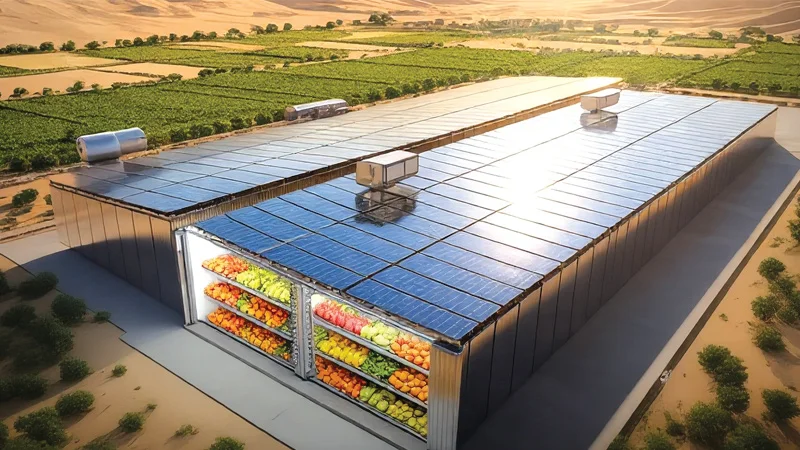
The frontline of this structural transformation is the deployment of IoT-enabled, solar-powered micro-cold rooms. Engineered specifically for smallholder cooperatives and Farmer Producer Organisations (FPOs), these units operate entirely independent of the power grid. High-efficiency rooftop solar arrays charge thermal storage systems during peak daylight hours, maintaining a steady, regulated climate inside the chamber 24/7.
Unlike traditional commercial cold storage units that cost upwards of Rs 50 lakh, these modular units are deployed directly at rural aggregation hubs. This allows marginal farmers to lease storage space on a flexible, pay-per-use basis.
By scaling down the technology to a micro-level, the logistics chain eliminates the immediate pressure of distress sales. Tomatoes, grapes, and coriander can now be preserved safely for up to three weeks, giving local growers the power to hold their inventory until market prices stabilise.
Managing ethylene and ripening
This infrastructure shift goes beyond simple refrigeration; it leverages advanced thermodynamic automation. Modern micro-cold rooms are equipped with arrayed sensor suites connected to cloud-based Artificial Intelligence engines.
These AI frameworks do more than monitor temperature and humidity. They track chemical changes in the air, specifically measuring ethylene build-up – the gas emitted by fruits as they ripen.
When the algorithm detects an accelerated ethylene spike, it automatically adjusts the internal ventilation and humidity ratios. This digital preservation slows down the decay loop, extending the optimal transport window for delicate produce by up to 300 per cent. The result is a dramatic elimination of post-harvest loss, ensuring that food moves securely into urban supply chains rather than landfill sites.
From perishables to smart steel silos
While solar refrigeration protects fruits and vegetables, a parallel infrastructural upgrade is securing India’s grain reserves. Under the renewed PM-Aasha scheme, the public and private sectors are rapidly phasing out antiquated, outdoor bag-storage models in favour of automated, galvanised steel hub silo complexes.
Facilities like the massive automated complexes operational in Punjab and Madhya Pradesh utilise integrated AI monitoring platforms to preserve bulk wheat and maize. These systems adjust continuous internal aeration based on moisture fluctuations, eliminating the need for traditional jute bags and saving an estimated Rs 700 per tonne in handling fees.
By building this hybrid network – where smart steel silos secure staple grains and modular solar rooms preserve perishables – India is constructing a resilient, decentralised buffer against climate uncertainty. This convergence of industrial innovation and agricultural security demonstrates that the path to zero hunger is paved with smart, climate-resilient infrastructure.
Unlike traditional commercial cold storage units that cost upwards of Rs 50 lakh, these modular units are deployed directly at rural aggregation hubs. This allows marginal farmers to lease storage space on a flexible, pay-per-use basis