


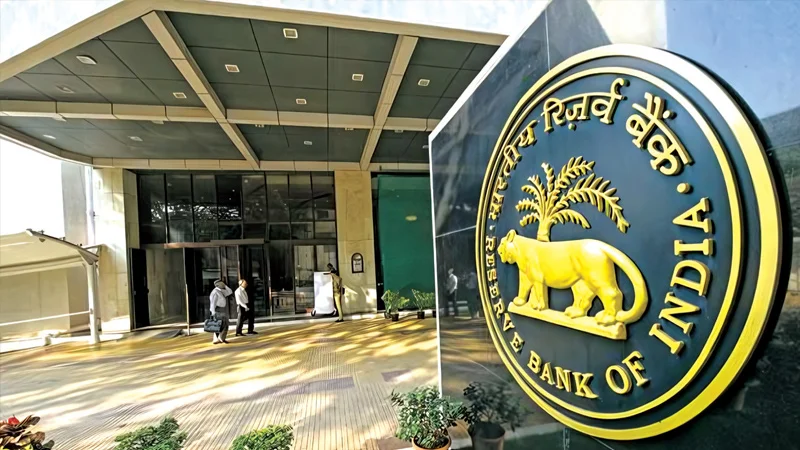


The domestic economy is expected to remain resilient in 2026-27, despite a challenging external environment characterised by elevated energy and commodity prices, rising logistics costs, volatility in global financial markets, and uncertainties surrounding global trade policies, said the Reserve Bank of India (RBI) in its Annual Report 2025-26, which was released on May 29.
On the global economy, RBI said geopolitical risk has re-emerged as the dominant drag on global growth in 2026. The adverse impact of the outbreak of the conflict in West Asia at the end of February 2026 is reflected in forecasts of global growth and inflation.
“Growth prospects are supported by India’s strong macroeconomic fundamentals, including robust domestic demand, relatively lower dependence on exports as a growth driver, and a stable policy environment,” the Central Bank emphasised.
In the IMF’s baseline scenario, the global economy is projected to grow by 3.1 per cent in 2026 (as against the earlier projection of 3.3 per cent in January 2026), while global merchandise and services trade volume is expected to decelerate to 2.8 per cent in 2026, it said.
“Further intensification of the conflict, its prolongation or widening geographical spread, if any, remain the key downside risks to the global economic outlook,” it emphasised.
With continued geopolitical tensions, inflation faces upside risks. The surge in energy prices and disruptions to key shipping routes could intensify supply-side pressures. In the IMF’s baseline scenario, the global inflation is projected to be higher at 4.4 per cent in 2026 than the earlier projection of 3.8 per cent in January 2026,” the RBI said.
“Financial markets may exhibit higher volatility with tighter macroeconomic conditions and broader risk-off sentiment. Elevated valuations in technology sectors may undergo reassessment, raising the risk of corrections in equity markets,” it said.
With increased protectionism and debt sustainability concerns, the escalating geopolitical risk calls for coordinated policy actions across fiscal, monetary and multilateral fronts, it stated.
Against the backdrop of a moderate global growth, the outlook for the Indian economy in 2026-27 remains positive, supported by strong macroeconomic fundamentals, although a prolonged West Asia conflict may pose downside risk, the RBI said.
“The healthy balance sheets of the corporate and banking sectors along with the Government’s continued thrust on capital expenditure bode well for India’s strong growth trajectory,” it said.
Stating that the outlook for the agriculture sector in 2026-27 remains contingent upon the progress and distribution of the south-west monsoon, it said the likelihood of El Niño conditions poses downside risks to agriculture output.
“However, the rain-inducing positive Indian Ocean Dipole (IOD) conditions are likely to emerge towards the latter part of the monsoon season, which may partly offset adverse impacts,” it pointed out.
RBI said labour market conditions would improve further, supported by the full-scale implementation of the four labour codes, strengthening domestic demand and productivity.
“Considering these factors, and on the assumption that the adverse impact of the West Asia conflict would remain contained in the near-term, real GDP growth for 2026-27 is projected at 6.9 per cent with risks tilted to the downside,” the RBI said.
Inflation in 2026-27 is likely to remain aligned with the target on the back of adequate foodgrain stocks, sufficient reservoir levels and stable agricultural prospects despite possible El Niño conditions and above-normal summer temperature, according to the annual report.
However, the evolving upside risks to inflation may emanate from multiple other factors such as spike in global fuel and commodity prices amid geopolitical tensions, potential spill-overs to input and wage costs, and volatility in the exchange rate. “Considering all these factors, CPI inflation for 2026-27 is projected at 4.6 per cent with risks tilted to the upside,” the RBI said.
While ongoing geopolitical conflicts and policy uncertainty pose downside risks to India’s merchandise exports, implementation of trade agreements with several trade partners and a sharp focus on scaling domestic manufacturing in strategic and frontier sectors would strengthen export competitiveness and reduce critical import dependence, it said.
Robust outlook for India’s services trade balance, in particular software and business services, and inward remittances from non-Gulf countries is expected to support current account balance during 2026-27, it added.
In case of FPI, flows would be conditional upon global risk appetite. However, finalisation of the ongoing bilateral and regional trade agreements is expected to boost India’s trade and investment opportunities, facilitating capital inflows during 2026-27, it stated.
The RBI said the Indian banking system would remain resilient, supported by prudent regulatory reforms, stable credit growth and adequate capital buffers. However, lingering geopolitical tensions and supply chain disruptions may pose near-term risks to corporate earnings and the performance of loan portfolios, it cautioned
“Elevated sovereign yields may also exert pressure on financial institutions ’investment portfolios. Nonetheless, on balance, supported by sound fundamentals and healthy balance sheets, the domestic financial system has sufficient buffers to withstand adverse shocks,” it said.
Stating that the Indian economy exhibited resilience in 2025-26, amidst several external headwinds, supported by strong private consumption, sustained investment and sound macroeconomic fundamentals, it said going forward, India’s growth outlook remains positive, though the effects of West Asia conflict and weather-related disruptions could pose headwinds to growth and inflation in the short run.
“However, healthy corporate and bank balance sheets, government’s continued thrust on capital expenditure and the implementation of trade agreements with the key partners are expected to sustain investment and growth momentum,” it said.
“Nevertheless, in a highly uncertain global environment, continuous assessment of the evolving developments is warranted to frame the appropriate policy response on an ongoing basis,” it concluded.
Digital and structural pivot
While the headline GDP numbers capture the immediate economic pulse, the RBI Annual Report highlights a more profound structural shift occurring beneath the surface: the transformation of India into a digitally-integrated economy.
This transition is not merely a technological upgrade but a fundamental change in how the economy absorbs shocks and drives efficiency.
Central to this is the explosion of India’s digital payment ecosystem. With the Unified Payments Interface (UPI) consistently setting new benchmarks—surpassing 200 billion transactions annually—the “formalisation” of the Indian economy has moved at a pace once thought impossible.
The RBI notes that this digitalisation has done more than just simplify retail; it has created a real-time data pipeline for policymakers. By integrating disparate segments—from the e-Shram portal for the unorganised workforce to the National Career Service platform—the Government has developed a responsive mechanism to track labour market shifts and deliver welfare directly.

This precision reduces leakages and ensures that domestic demand remains insulated, even when global trade flows are disrupted.
The report underscores a deliberate pivot in manufacturing and services. The identified “strategic seven”—semiconductors, electronics, biopharma, rare earths, chemicals, textiles, and capital goods—represent a move away from low-value assembly toward higher-complexity integration.
By leveraging Production-Linked Incentives (PLI) and massive infrastructure investments like the PM GatiShakti and the National Logistics Policy, the economy is systematically reducing its dependence on imported critical components. This is a vital insurance policy against the supply-chain vulnerabilities highlighted by the recent West Asian conflicts.
Finally, the RBI touches upon the “future-proofing” of the financial system. The institution is actively advancing toward AI-driven supervision, tokenisation, and Central Bank Digital Currency (CBDC) pilots.
These aren’t just futuristic experiments; they are essential defensive tools in an era where digital fraud and cyber-security threats are becoming as consequential as traditional financial volatility. By proactively building these safeguards, the RBI is shifting the narrative from merely “managing inflation” to “governing innovation.”
This structural hardening ensures that when the next global tremor hits, the Indian economy does not just bounce back—it remains structurally tethered to a trajectory of long-term productivity and domestic autonomy.