




Blitz Bureau
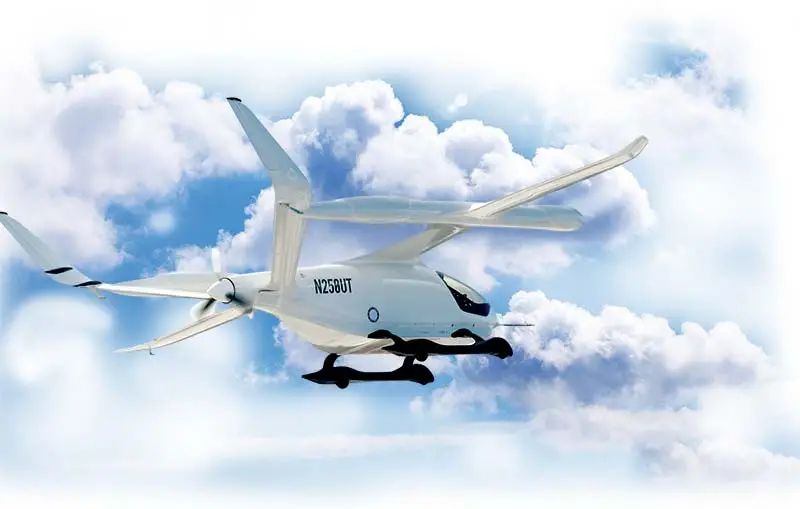
In a breakthrough for sustainable aviation, Beta Technologies’ Alia CX300 has become the first all-electric aircraft to successfully fly passengers, covering a 130-kilometre route in the US at a cost of only Rs 694 ($8), according to Fox News.
The 30-minute flight — from East Hampton to New York’s JFK Airport —carried four passengers and marked a historic first for both the New York Port Authority and the broader electric aviation sector. In stark contrast, a similar trip via helicopter would typically cost over Rs 13,000 ($160) in fuel alone.
American company Beta Technologies test runs its first battery-powered plane with four passengers
“Charging this thing up and flying out here cost us about $8,” said Kyle Clark, founder and CEO of Beta Technologies. “Of course, you have to pay for the pilot and the airplane, but fundamentally, it’s way less expensive.”
Quiet, clean, and cost-efficient
Beyond cost, the electric aircraft offered another perk: near-silent flight. With no roaring engines or fuel combustion, passengers were able to hold conversations with ease — a potential game-changer for short-haul business or commuter air travel.
Beta Technologies, based in Vermont, has been developing electric aviation technology since 2017. It recently raised $318 million in funding to accelerate the production, certification, and commercial rollout of its fleet. The CX300, designed for conventional take-off and landing, is expected to receive FAA certification by the end of the year.
The aircraft can fly up to 250 nautical miles (about 463 km) on a single charge, positioning it as a strong contender for short intra-city and inter-city routes.
While the CX300 leads in the conventional aircraft category, Beta is also developing the Alia 250 eVTOL, a vertical take-off and landing aircraft designed for urban mobility.
Beta’s success comes amid growing competition in the electric aviation space. Archer Aviation, for instance, was recently announced as the official air taxi partner for the Los Angeles 2028 Olympics, with plans to launch network operations by 2026, pending FAA certification.
As cities across the globe look for cleaner, faster alternatives to ground transportation, electric aircraft are emerging as a viable solution, especially for congested urban corridors and regional commutes. With dramatically lower operating costs, reduced noise, and zero emissions, the technology could reshape the future of mobility in ways similar to how electric vehicles have transformed road transport.
According to a BBC Science Focus report, it was in June 2020, when the entire world was in a lock-down because of the Corona virus, that the future of human flight had arrived quietly.
EASA, the European Union Aviation Safety Agency, had then certified a two-seater plane made in Slovenia as safe to fly. Within a few years it was certified by equivalent bodies in the UK, the US and elsewhere. The Pipistrel Velis Electro became the first fully certified electric aircraft in the world in 2020.
“The achievement represents a growing interest and trust in the reliability of electric aircraft,” director of engineering and programmes at Pipistrel, Dr Tine Tomažič, had said then.
“Right now, aviation isn’t a major contributor to climate change,” said Dr Guy Gratton, associate professor of aviation and the environment at Cranfield University in the UK. An aeronautical engineer by trade, he’s also a test pilot who flies experimental electric aircraft.
“Aviation is generating around two and a half per cent of global carbon, which is small, particularly when you consider its importance to the global economy,” says Gratton. “There is science which is suggesting that the contribution through contrails may be rather worse than that, so it’s perhaps up to around seven per cent.”
The industry is improving its emissions by roughly two per cent per passenger mile per year, Gratton says. But it’s also growing by five per cent a year.
The global demand for air transport is estimated to double by 2040, which means that while other industries are showing meaningful signs of decarbonising in the face of the climate crisis, aviation is on track to increase its total emissions and, in the process, become one of the world’s worst polluters.